How to Protect Your Trees During a Heatwave
When a heatwave arrives, most people think about staying cool, watering the garden, and keeping their lawns from drying out. However, it's easy to forget that trees can also suffer during long periods of hot, dry weather.
Unlike winter, when many trees become dormant and require very little attention, summer is one of their busiest times of the year. Trees are producing new growth, supporting a full canopy of leaves, and using far more water than they do during the colder months. When rainfall is scarce and temperatures remain high, even healthy trees can begin to show signs of stress.
The good news is that a little extra care during a heatwave can help keep your trees healthy and reduce the risk of long-term damage.
How Does Hot Weather Affect Trees?
Trees rely on moisture in the soil to transport nutrients from their roots to their leaves. During a heatwave, the ground can dry out surprisingly quickly, making it harder for trees to replace the water they lose through their leaves each day.
Young trees are usually the first to struggle because their roots haven't fully established. However, mature trees are not immune. Extended periods of dry weather can weaken even well-established trees, making them more vulnerable to disease, pest infestations, and branch dieback.
Heat stress doesn't always appear overnight. In many cases, the effects develop gradually over several weeks, which is why regular checks during summer are so important.
Signs Your Tree May Be Under Stress
A healthy tree should have vibrant foliage and steady seasonal growth. If something looks different during a dry spell, it's worth taking a closer look. Heat stress doesn't always show up immediately, so keep an eye out for these common warning signs:
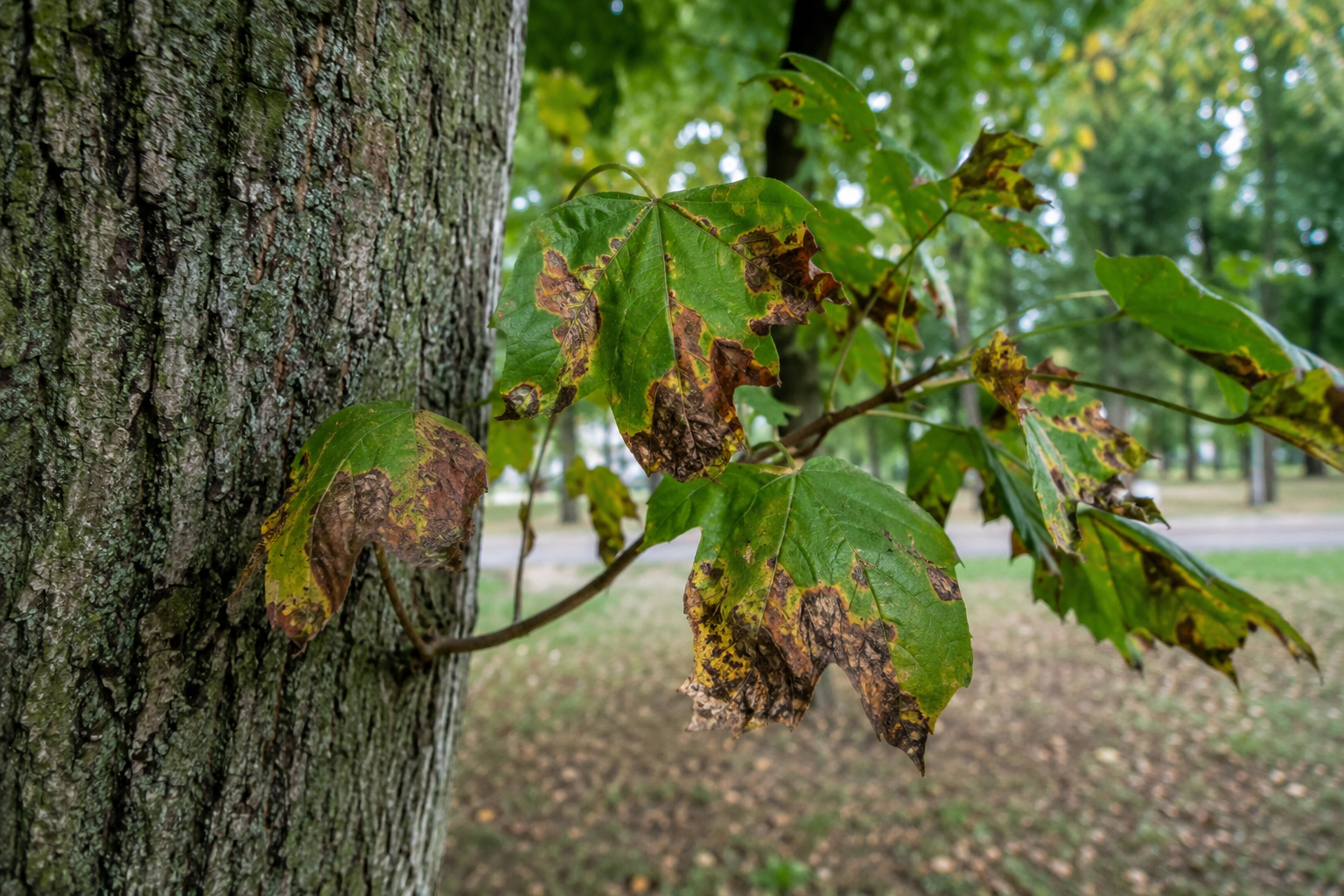
- Brown leaf edges: Often referred to as "leaf scorch," this is a classic sign that the roots cannot draw up water fast enough to cool the leaves.
- Wilting or curling foliage: Leaves will often curl inward to reduce their surface area and minimize further water loss.
- Premature leaf drop: To survive severe drought, a tree will sometimes abandon its leaves early to save energy and moisture for its trunk and roots.
- Brittle or dying twigs: The outermost branches and twigs are the hardest for the tree to pump water to, making them the first to die back.
- A thinning canopy: The tree might look noticeably sparser or less vibrant than it did in the spring.
- Dry, cracked soil: While not a symptom of the tree itself, deep cracks in the soil around the base mean the root zone is dangerously parched.
These symptoms don't necessarily mean a tree is beyond saving, but they do suggest it urgently needs extra care or a professional inspection to prevent long-term decline.
Watering Matters More Than You Think
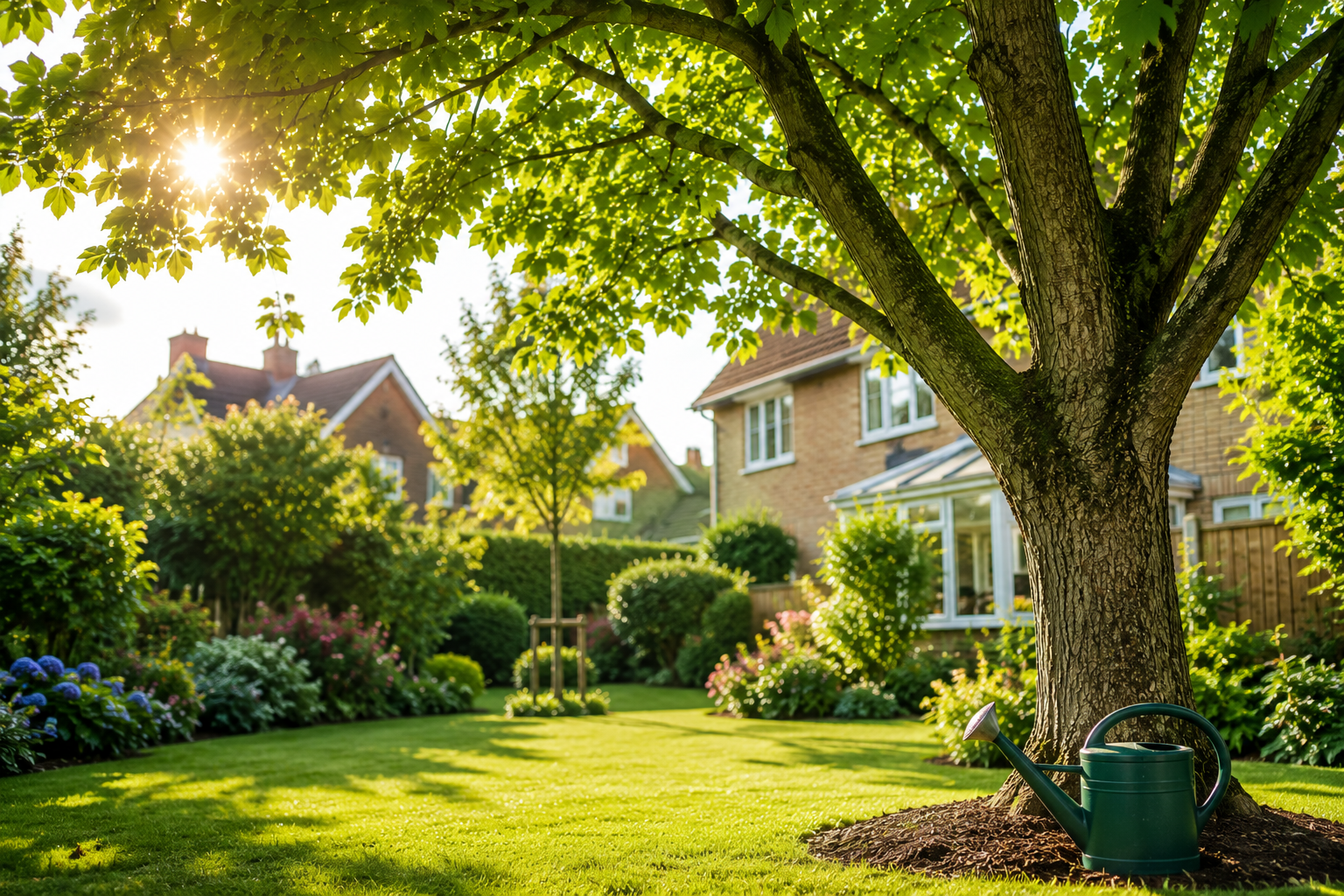
One of the best ways to support trees during a heatwave is to water them correctly. A deep soak every few days is generally far more beneficial than giving them a light sprinkle every evening. Deep watering encourages roots to grow further down into the soil, helping trees become much more resilient during dry conditions.
- How much water? Newly planted trees need the most attention during their first two or three summers and benefit from roughly 50 litres of water a week during a dry spell. Using a slow-release watering bag is an excellent way to deliver this gradually.
- When to water: For the best results, water early in the morning or later in the evening when evaporation is at its lowest.
- Navigating hosepipe bans: If a local hosepipe ban is in place, you can still protect your trees. Switch to a watering can or bucket, and consider using greywater—such as saved bathwater or washing-up water—provided it isn't heavy in harsh chemicals or bleach.
Mature trees may also require this kind of supplemental watering if hot weather continues for an extended period without meaningful rainfall.
Mulching Helps Lock in Moisture
Adding a layer of organic mulch around the base of your tree is one of the simplest ways to protect it during hot weather. Mulch helps the soil retain moisture, keeps the roots cooler, and suppresses weeds that compete for water. Materials such as bark chippings, compost, or wood chips all work well.
Be careful not to pile the mulch directly against the trunk, as this can trap moisture and encourage decay. Leaving a small gap around the base allows air to circulate while still providing all the benefits of mulching.
Should You Prune Trees During a Heatwave?
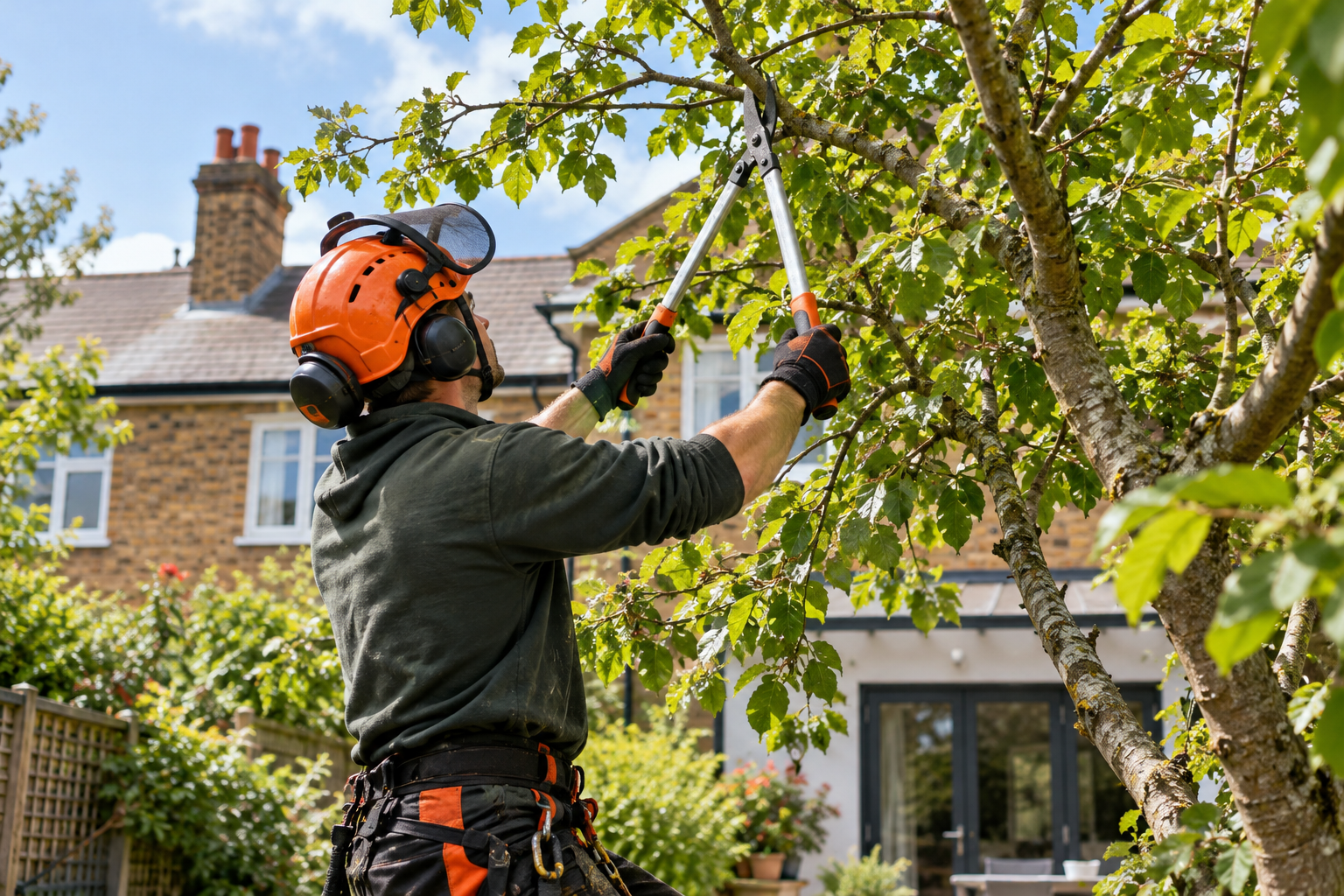
Many homeowners assume summer is the perfect time to prune, but heavy pruning during extreme heat is rarely recommended. Removing large sections of the canopy can expose the tree to additional stress at a time when it's already working hard to conserve water. However, removing dead, damaged, or dangerous branches may still be necessary, particularly if they pose a risk to people or property. If you're unsure whether a tree needs pruning, it's always worth seeking professional advice before carrying out major work.
Looking after trees during a heatwave often involves more than simply watering them. A professional assessment can identify early signs of stress, structural defects, or disease before they become more serious and expensive to deal with. Heatwaves can be challenging for even the healthiest trees, but a few simple steps can make a real difference. Deep watering, mulching, regular inspections, and timely maintenance all help trees stay healthy throughout periods of prolonged hot weather.
If you're unsure whether your trees are coping with the summer heat, Brixton Tree Professionals can provide professional advice and practical solutions to keep them healthy, safe, and looking their best all season long.