Can a Tree Stump Grow Back After Being Cut Down?
Cutting down a tree does not always mean the tree is completely gone. In some cases, the stump and roots can stay alive beneath the ground and begin producing new shoots. This is common with tree species that naturally regrow from the base or root system.
For homeowners, this can be frustrating. You may think the tree has been dealt with, only to find fresh growth appearing weeks or months later. While these shoots may seem harmless at first, they can quickly become untidy and difficult to manage. Understanding why tree stumps grow back and how to stop it can help keep your garden clear, safe, and easier to maintain.
Can a Tree Stump Really Grow Back?
Yes, a tree stump can grow back after the tree has been cut down. This depends on the species, the condition of the roots, and how the stump was left. When a tree is felled, the main trunk is removed, but the root system may still contain stored energy. If the roots remain healthy, they can continue feeding the stump and encourage new shoots to appear.
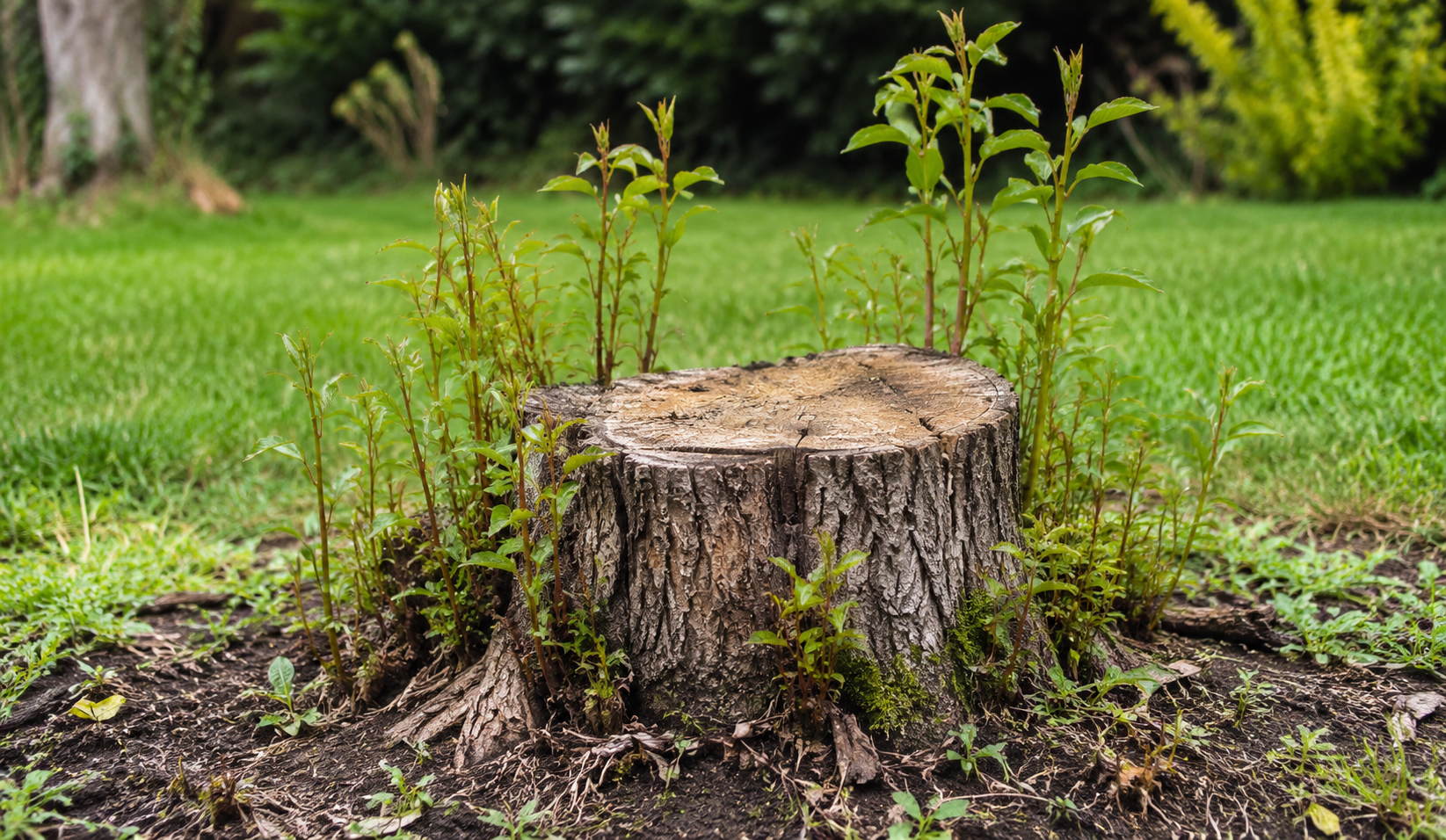
This does not always mean the full tree will return in the same way. Instead, you may notice suckers, small stems, or leafy growth appearing from the stump or nearby roots. These shoots can continue to grow if they are not removed, and over time, they may become thicker and harder to control.
Why Do Tree Stumps Grow Back?
Tree stumps grow back because the roots may still be alive after the tree has been cut. Some tree species are especially resilient and will keep trying to survive even after the trunk has been removed.
Regrowth is more likely when the stump is cut down and left in place. Moisture, nutrients, and stored energy in the root system can all support new growth. Willow, poplar, sycamore, ash, elm, and some fruit trees are known for producing shoots after being cut back.
In some cases, shoots may also appear from the surrounding roots rather than the stump itself. This can make the problem spread further across the garden, especially if the root system is large or close to lawns, borders, paths, or fencing.
Why Can Stump Regrowth Be a Problem?
At first, a few small shoots may not seem serious. However, stump regrowth can become an ongoing maintenance problem. The shoots can make your garden look untidy and may need regular cutting back.
An old stump can also get in the way of new turf, planting, fencing, patios, or landscaping work. If you are planning to improve your garden, the remaining stump may make it harder to level the ground or prepare the area properly.
Tree stumps can also create a trip hazard, particularly in smaller gardens or areas used by children and pets. As the wood begins to decay, it may attract insects, encourage fungal growth, or leave the surrounding ground uneven. This is why many homeowners choose to remove the stump rather than leave it to break down naturally.
How Can You Stop a Tree Stump from Growing Back?
The best way to stop a tree stump from growing back is to deal with it properly after the tree has been felled. Cutting the tree close to ground level is often not enough, as the roots may still produce new growth.
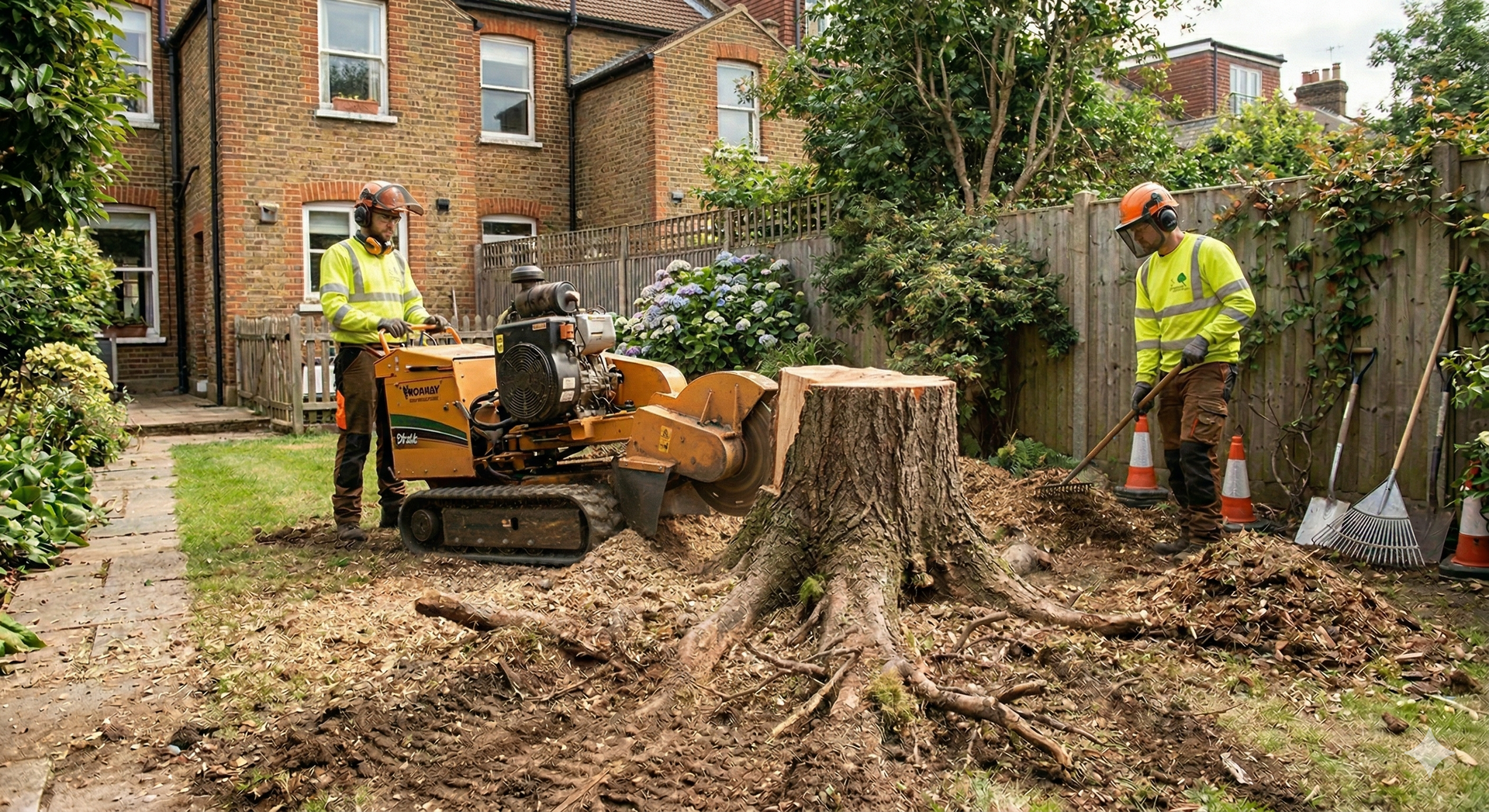
One effective option is stump grinding. This involves grinding the stump down below ground level, removing the visible stump and making the area easier to restore. It is often less disruptive than digging out the full root system and is a practical solution for many gardens.
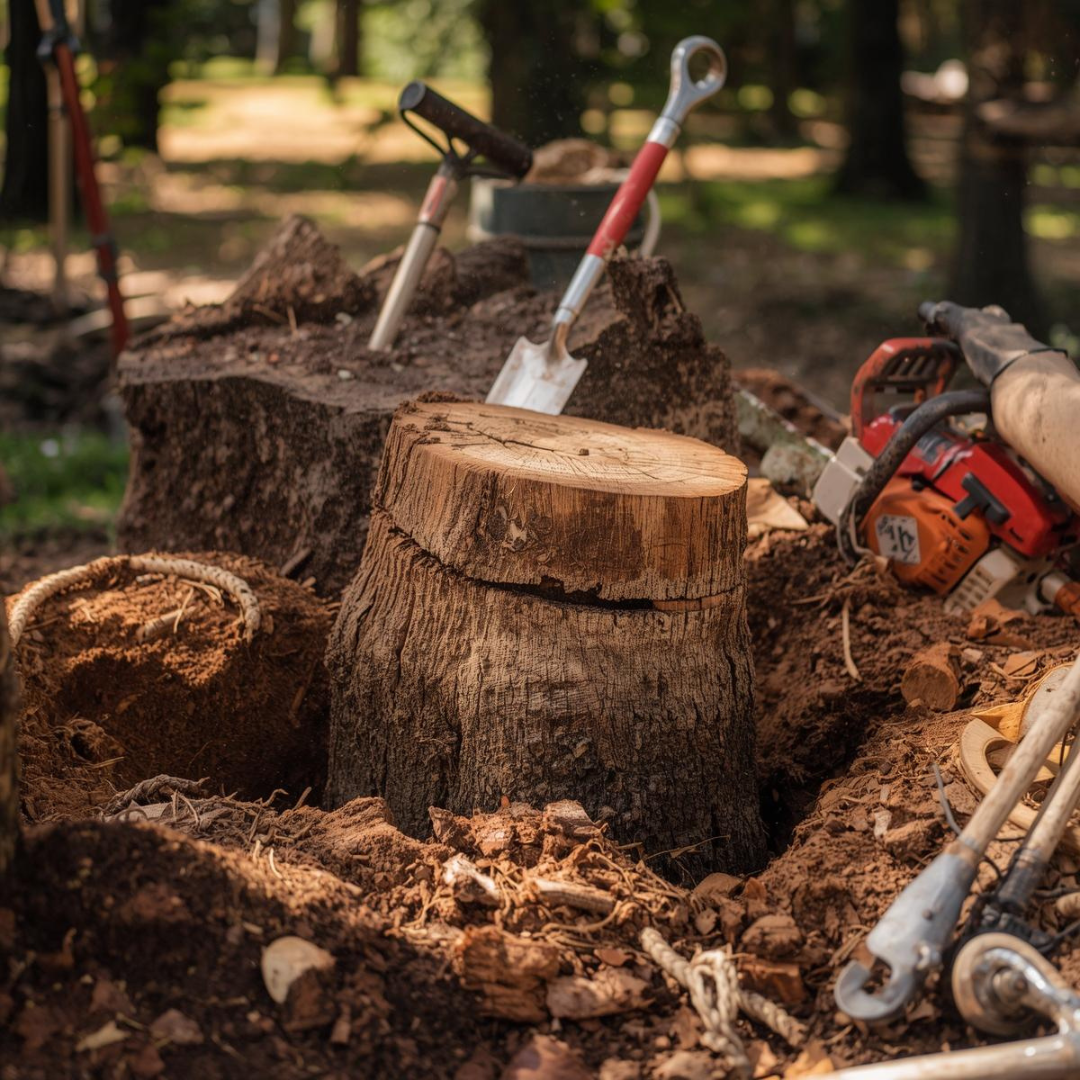
Full stump removal is another option, where the stump and part of the roots are taken out. This may be suitable if the stump is large, causing problems, or blocking future landscaping plans. In some cases, professional stump treatment may also be recommended to help prevent regrowth. This should always be handled carefully, especially if the stump is near lawns, plants, other trees, or garden features.
How Brixton Tree Professionals Can Help
At Brixton Tree Professionals, we provide stump grinding and stump removal services to help stop unwanted regrowth and clear your outdoor space properly. Our team can assess the size, position, and condition of the stump before recommending the most suitable solution.
Whether your stump is producing new shoots, taking up garden space, or getting in the way of landscaping plans, we can remove it safely and efficiently. We use the right equipment to deal with stubborn stumps and help leave your garden clear, level, and ready for turfing, planting, or general use.
A tree stump can grow back after being cut down if the roots are still alive. While trimming new shoots may help temporarily, it often does not solve the problem fully. Stump grinding or stump removal is usually the most effective way to prevent regrowth and make the area usable again.