Common Tree Diseases to Watch Out For
Trees add character, shade and valuable greenery to gardens and streets across our local area. From large, mature canopies in established spaces to smaller ornamental trees tucked into urban terraced gardens, keeping them healthy is important for both their appearance and safety.
Unfortunately, trees can be affected by a range of diseases and pests. Some develop slowly and may go unnoticed for months, while others can cause significant damage in a relatively short period. Knowing the warning signs can help you arrange professional tree care before a minor problem becomes a major one.
Ash Dieback
Ash dieback is one of the most serious tree diseases found in the UK. It affects ash trees and is caused by a fungus that can lead to progressive decline. An affected tree may continue growing for some time, but repeated infection can weaken it and increase the amount of dead wood.
What to look for:
- Black or brown leaves
- Dead shoots and dieback within the crown
- Diamond-shaped lesions on young branches
If you have an ash tree in your garden showing unusual signs of decline, a professional inspection can help determine its condition.
Oak Processionary Moth (OPM)
While oak trees can suffer from general health problems like acute oak decline, one of the most pressing threats currently facing oaks across London and the surrounding boroughs is the Oak Processionary Moth. OPM is a pest that weakens the tree and poses a significant public health risk.
What to look for:
- White, silken nests attached to the trunks and thick branches
- Caterpillars moving nose-to-tail in long "processions" across the bark
- Thinning foliage where the caterpillars have stripped the leaves
Note: OPM caterpillars are covered in toxic hairs that cause severe skin rashes and breathing difficulties. Never touch a nest or caterpillar—always call a professional.
Dutch Elm Disease
Dutch elm disease has affected elm populations throughout Britain for decades. The disease restricts the tree's ability to transport water, causing rapid decline. If an elm tree in or around your property appears to be declining unexpectedly, professional advice can help establish the cause.
What to look for:
- Leaves wilting, turning yellow or brown
- Premature leaf fall
- Dieback that begins in individual branches before spreading through the crown
Honey Fungus
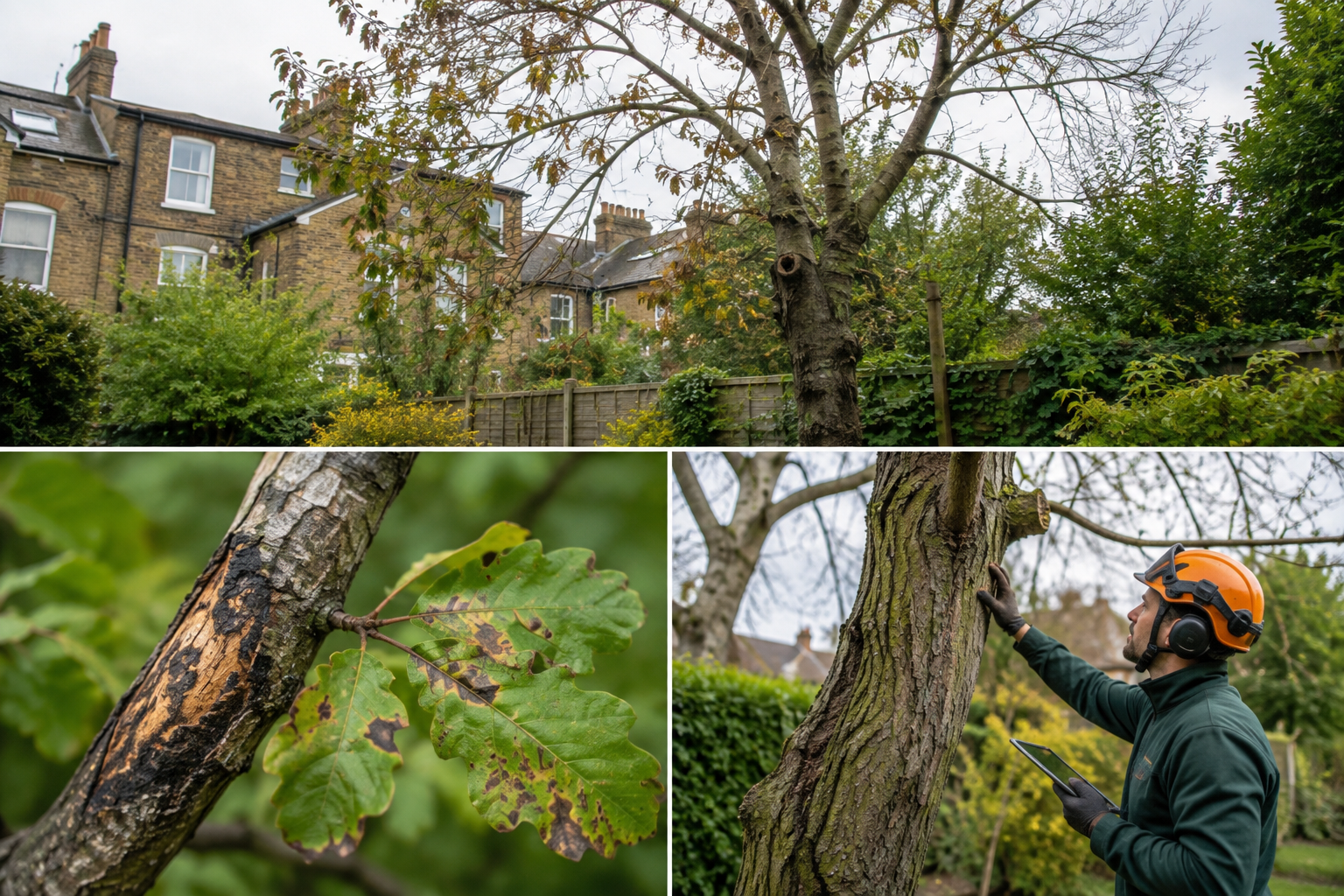
Honey fungus is another condition that can cause serious problems for trees. It attacks the roots and can affect a wide variety of species. Because the fungus spreads underground, identifying the extent of an infection can be challenging without professional assessment.
What to look for:
- Poor overall growth and sparse foliage
- Premature leaf loss and gradual branch dieback
- Honey-coloured mushrooms appearing around the base of the tree (though these are not always present)
Phytophthora and Other Root Diseases
Various Phytophthora species can affect trees, particularly through their root systems. Because these symptoms mirror environmental stress, accurate diagnosis is important before deciding on treatment or tree removal.
What to look for:
- Yellowing leaves
- Canopy thinning
- Gradual dieback and poor growth
These symptoms can also be caused by other issues, including drought, poor drainage, pests or compacted soil.
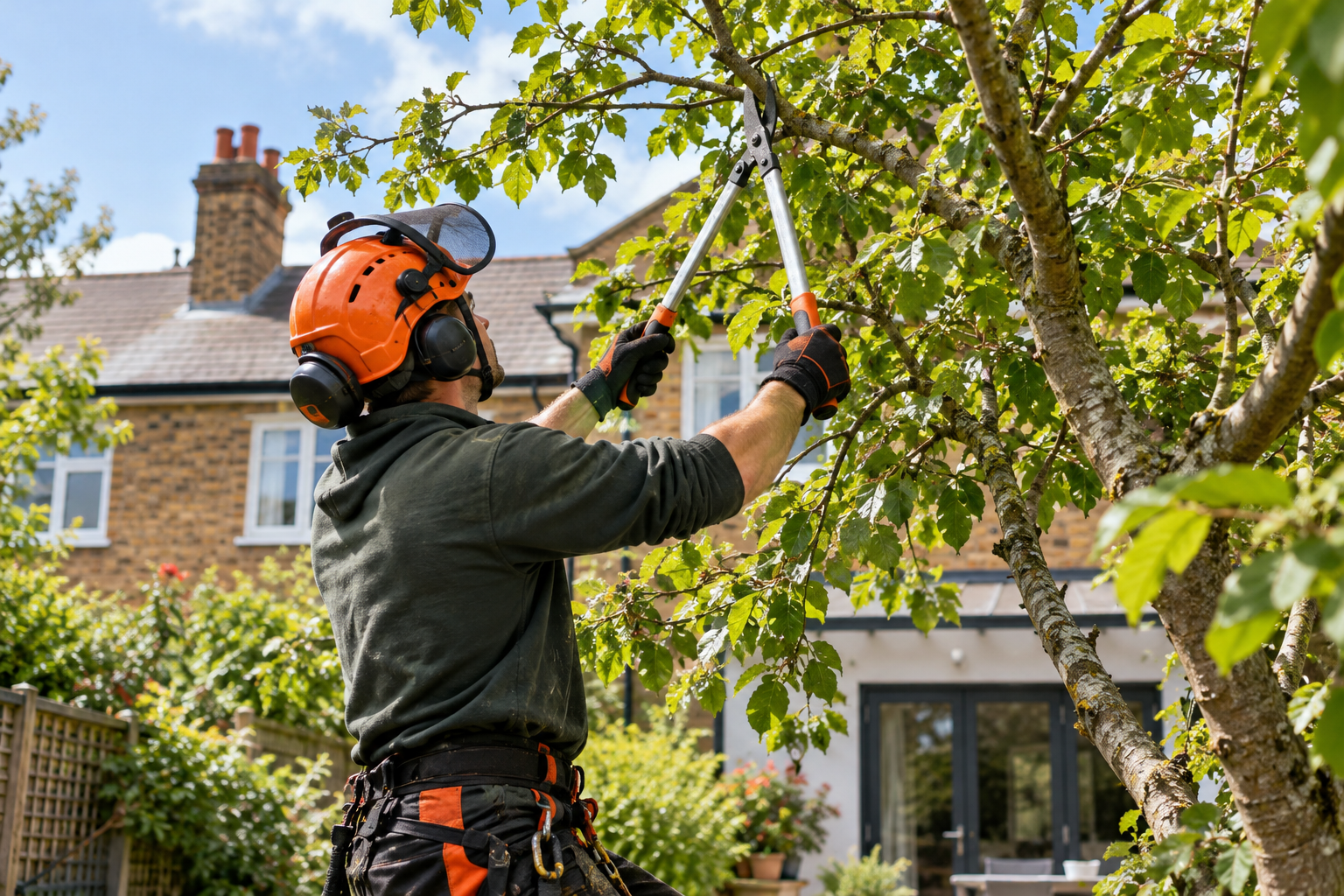
Regular inspections can make it easier to spot potential problems before they become more serious. Pay attention to unusual leaf loss, dead branches, fungal growth, changes in bark or a noticeable decline in overall growth. If you are concerned about a tree on your property, professional advice is often the best starting point. A qualified tree surgeon can assess the tree, identify potential causes and recommend appropriate tree care.
At
Brixton Tree Professionals, we provide expert tree services for homeowners and commercial properties throughout Brixton and the surrounding areas. Whether you have noticed signs of disease or simply want to check that your trees remain healthy and safe, our team can provide peace of mind and help protect your trees for years to come.